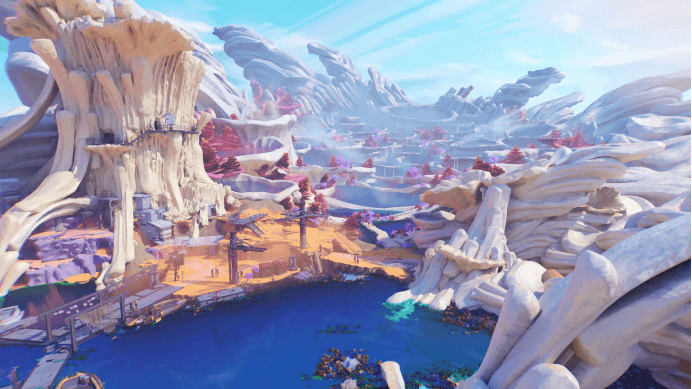
When the red light in the dark room came on, the first thing that appeared on the photo paper was not the image, but a line of faded pen words: “To Daisy, the last star in my eyes.” The handwriting is my mother’s, and Daisy is mine. The old-fashioned camera in my hand is the only relic she left me as a battlefield photographer. Now, I want to use it to re-walk the road she has walked, and salvage the sunken memories in the scenery where she once pressed the shutter. At the beginning of _The Star Named Eos_, there was no gunshots, only the smell of developer, and an inscription that was many years late.
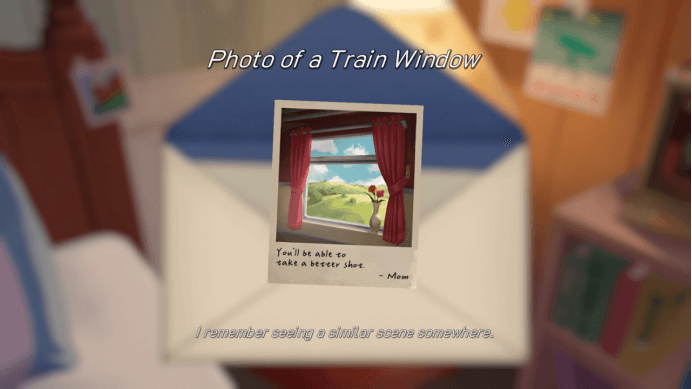
My journey began with a box of scattered negatives. Each undeveloped film is a coordinate that guides me to a real place: a bullet hole wall in Sarajevo, a bamboo bridge in Cambodia, and a dry well next to a refugee camp in Africa. The core mechanism of the game is “restorative photography” — I not only have to find the position where my mother was standing, but also adjust the focal length, aperture and angle of the camera until the picture in the frame completely coincides with the afterglow on the negative. When that moment comes, the images of the past will be superimposed on the current landscape like ghosts: window lattices that have not collapsed appear on the ruins, and the footprints of children running appear in the weeds. Press the shutter, and time and space are sewn together.
But the camera is not just a recording tool. Through the lens, I can see the “traces” left by my mother — sometimes a mark engraved on the tree, sometimes a key under a stone, and sometimes a rasp of light that always stays in a certain corner. These traces lead me to solve the environmental puzzle: adjust the three-prism refracted light to open the dark door, use long exposure to capture the fleeting shadow path, and even assemble a complete password by shooting the four-season changes in the same place. The process of solving puzzles has become the process of learning to see the world with her eyes.
With the accumulation of photos, the image of the mother has changed from legendary to concrete. I washed out that she took not only the war, but also the stubborn wild flowers by the trenches, the soldiers exchanging candies, and the tired smile she took in the reflection of the puddle. The notes and letter fragments gradually put together a contradictory person: she believed that images could stop the war, but she wrote in the letter that “every photo I took is a suicide note”; she named me “Daisy” because it was the only flower that could be seen on the battlefield, but she never told me the origin of the name.
The most stinging discovery for me is those “not taken photos”. In some places, I will find the film shell left in my mother’s camera, and next to it is a note written by her: “Not enough light”, “Hand shaking” and “That moment should not be photographed”. The game gives a choice here: I can “imagine” and restore the photo in my mind with the description and scene clues. When I finally “took” the image of her blurred by shaking hands, a mother dragging her child out of the fire, the system did not reward, only slowly appeared the words in her diary: “Some moments, the camera is a compassionate blind man.”
Later in the game, I began to find the physical object corresponding to the photo in reality. An exotic coin she mentioned in her notes was actually in the iron box in my attic; the doll in the hand of the refugee children in the photo was sitting quietly in the corner of my childhood bed. The puzzle of memory spread from virtual to reality, and I was shocked to realize that this pursuit had begun long before she left — she turned the journey into pieces and hid it in my life. When I grew up, I would find it piece by piece in the way she taught me.
In the final chapter, I came to the place where my mother’s last roll of film was marked. It was a nameless hillside, with only grass and the sky in the frame. I can’t recall any superimposed images even if I adjust all the parameters. Just when I was about to give up, the game prompted me: “Take off the camera and look with your eyes.” I put down the machine and found that there was a small groove in the rock under my feet with a rusty lens cap in it. It was engraved on the cover: “Tow Daisy: Nothing happened here, but the sunset was beautiful that day. I want to watch it with you.”
I didn’t press the shutter. I sat quietly in the game until the end of the virtual sunset, just as she hoped. At that moment, I understood that what my mother left me was not the truth or the answer, but a pair of trained eyes and a way to find the whole in the broken world.
After quitting the game, I took out the old photo album at home. _The Star Named Eos_ didn’t give me a story about the hero’s mother. It gave me a flowing dark room. There, every photo is said: memory is not used to be preserved, but to be used to be displayed and fixed in time, and finally become vivid again in someone’s eyes. And the so-called inheritance, sometimes just an old camera, and enough patience, waiting for those moments left on the negative, through the years, and finding their eyes again.