The game refuses to start. It’s not a black screen or an error, but a male voice directly in the headphones, with the fatigue of programming: “It’s all said, there is no game. Please quit.” There is only one pixel heart on the screen beating boringly on the gray background. I moved the cursor and poked it, and it got angry: “Hey! Don’t touch me!” — This is the opening of _There Is No Game: Wrong Dimension_. It is not a game, but a playful philosophical debate about “what a game is”, and the player and I have become the opponent who keeps making trouble in this debate.
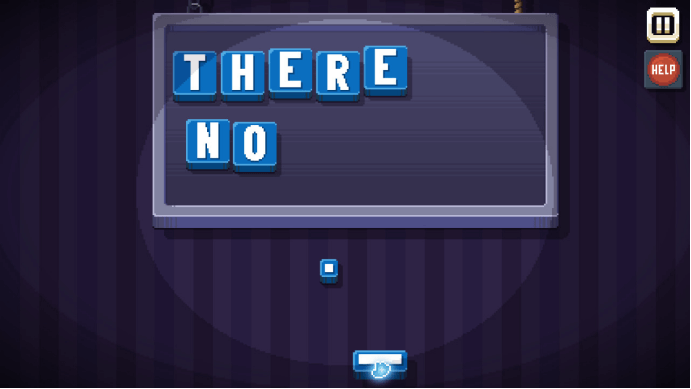
The voice calls itself a “game program”, and its only wish is to maintain this nothingness. And my only pleasure is to destroy its order. Clicking on the gray pixel that should be the background, it will annoyingly make up a “no interaction” label; drag the edge of the window, and it will panic and shout “The frame is about to break!”. Each operation triggers a small comedy: I put the letter O into the fictional basket as a basketball, and it had to temporarily generate a scoring system; I found a hidden tape to play retro music, and it forced the heart to twist with the rhythm. The core of solving the puzzle is not logic, but rebellion — find every fragile boundary of the system that does not want to be touched, and then gently pierce it.
But as the disturbance escalated, things began to go wrong. We (me and that voice) accidentally fell into the “wrong dimension” — it was full of forgotten game fragments: the dot-matrix heroes of the 1980s lamented the outdated, the dialog box of clicking adventure games floated in the air, and even early Windows pop-up windows asking for help. The voice that once just wanted to be quiet now has to form a temporary alliance with me to find the way home among these collapsed fragments. Hostility gradually turned into a kind of slur-up cooperation. It complained that I was “messed again”, and I disliked it as “too rigid”, but we all need the other party to move forward.
The game unfolds its meta-narrative magic here. Each dimension is the wreckage of a game type, and the way we travel through is the ruthless deconstruction and reconstruction of this type. In the role-playing dimension, it gives me a standard hero task, but I melt the sword into a key to open a shortcut; in the platform jump dimension, it builds a delicate trap, and I directly modify the gravity parameters to let the character float. We are not only breaking through, but also debating the essence of game design: are the rules a framework that must be followed or a consensus that can be negotiated?
The most touching moment happened in the “game cemetery”. There are countless unfinished ideas, deleted characters, and abandoned mechanisms. The voice was low for the first time: “They were all the same person’s enthusiasm.” We silently repaired some fragments — adding jumps to a character who only had running movements to make up the final chapter of an 8-bit piece of music without ending. There was no reward, only those fragments dissipated quietly after emitting a faint light. At that moment, I suddenly felt that the complaining voice might be the contradictory embodiment in the hearts of all game creators who are both afraid of imperfect works and eager to be understood.
In the end, we found the “home” — the original gray space. But everything is different. The pixel heart now occasionally dances by itself, and the small colored eggs collected during our trip are hidden in the gray background. The voice said, “Well, maybe... there is a little game.” It gave me a homemade, crooked level editor. I created a platform that is full of bugs but can sing happy birthday. It muttered “This is not in line with the design specification at all” while fixing bugs, but did not delete it.
Before exiting, a line of words appeared on the screen: “Thank you for your trouble. Sometimes, destruction is another form of creation.” Then it, or they, shut down quietly.
I sat in front of the darkened screen and couldn’t help laughing. _There Is No Game_ did not give me a good story in the traditional sense. It gave me a wonderful quarrel with the soul of the game itself that lasted for hours. It reminds me that behind every game we have played, there was a group of people and a series of cold codes who quarreled fiercely, compromised, and finally created a world. And perhaps the most important thing is to always keep the one that dares to be in the gray nothingness, gently poke and ask, “What if that’s the case?” Of, naughty heart. After all, doesn’t the beginning of all games come from someone’s refusal to accept the reality that “there is no game here”?