The last time I checked the turbo tachometer, I saw my reflection swaying on the black dial. Outside the window, the sea level has swallowed the last row of stone steps of the old breakwater. My name is Aiden, and I am the last maintainer of this tidal power station called Tides of Tomorrow. And my workstation is becoming an island of steel. _Tides of Tomorrow_ did not give me the task of saving the world. It only gave me a wrench, a logbook, and a slowly approaching horizontal line — above this line, there is the power that must be maintained; under this line, there is the yesterday we abandoned.
Daily life is the repetition of metal and salt. Check the pressure valve in the morning, clean up the seaweed in the filter in the afternoon, and record the power generation data at dusk. The operation simulation is so specific that you need to turn the valve in the correct direction and tighten a specific number of bolts with a wrench. There is no simplified interface, only I can feel the resistance when the tool bites across the screen. But the most laborious thing is not maintenance, but “balance”: excessive power generation will accelerate equipment wear and tear, but insufficient power generation will lead to the darkness of coastal communities that depend on our electricity. The numbers on the dashboard are not scores, but responsibilities.
The community heard a voice through the radio. The old fisherman asked me to adjust the night output power so that his refrigerator could last for an extra week; the school teacher asked if the abandoned viewing platform could be opened and the children the last lesson of “seeing the land”; and the young man who was always protesting asked, “Are you maintaining us or the system that drowned us?” My choice is not the task branch, but the different handwriting on the log: sometimes “coordinated power supply time”, sometimes “recommended relocation to the third settlement point”, and sometimes only one sentence “the radio is silent, unable to respond”.
As the seasons advance, decision-making becomes more and more like a fable. When the storm warning strikes, I must decide whether to overload the power station to provide sufficient power for the evacuation fleet, or to protect the core unit to ensure that there is still electricity available after the disaster? The game didn’t pause to make me think. The sea is rising in real time, and the instrument is constantly beating. Once I chose to protect the unit, and three days later I received the news that the fisherman’s refrigerated boat capsized in the storm due to unstable power supply. The system did not punish me, but since then, the voice of the old fisherman has never appeared on the radio again.
The most silent narrative of the game is hidden in the details of the environment. Through the glass of the control room, I can see the half-sunk roof, the wreckage of the fishing boat wrapped around the transmission tower, and the old water level lines painted on the wall — one higher and higher, like a tightening nose. During the lunch break, I can walk to the outdoor maintenance platform, where there is a rusty bench. Sitting on it, I didn’t do anything. I just watched the seawater rise at an almost imperceptible speed and listened to the low and eternal buzzing of the tide generator. This moment tells me more clearly than any moral dilemma: what I am taking care of is a grave of civilization.
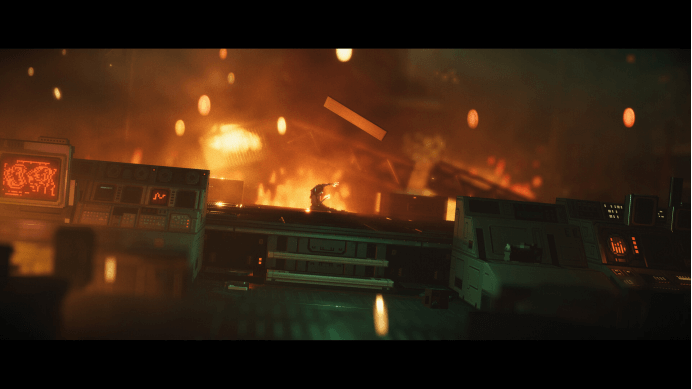
Finally, the evacuation notice came. But I can choose how to do it: turn off all units immediately to maximize the value of the equipment; or overload the last seventy-two hours of operation so that all families along the coast can fully charge the backup battery. I chose the latter. When the countdown began, all the instruments entered the red area, and the alarm sounded like the lament of a dying whale. For the last time, I walked through the corridor full of pipes and patted the machines that had accompanied me for hundreds of hours, as if they could feel gratitude.
When the searchlight of the rescue boat pierced the rain curtain, I sat in front of the console and pressed the final shutdown sequence. All the screens turned black one by one, and only one emergency light was still on, shining on the yellowed photo of the foundation of the power plant on the wall — the people on it smiled at the camera, and behind it was an open beach. At that time, the land was still underfoot, and tomorrow was still a good word.
After exiting the game, I turned off the light in the room and listened to my breathing in the dark for a while. _Tides of Tomorrow_ didn’t give me a plan to fight the climate crisis. It gave me a rusty valve and a pair of hands eroded by sea salt. It touched me with a huge sense of powerlessness — not powerlessness, but knowing that all operations are only delayed, but still have to screw each bolt to the specific responsibility of the specified torque. Before everything is flooded, the real courage may not be to build an ark, but to be the one who is still checking the data for the last time until the sea water reaches his ankles. Because as long as the light is still on, some people believe that the night is not the end, but a short breath before the next high tide.