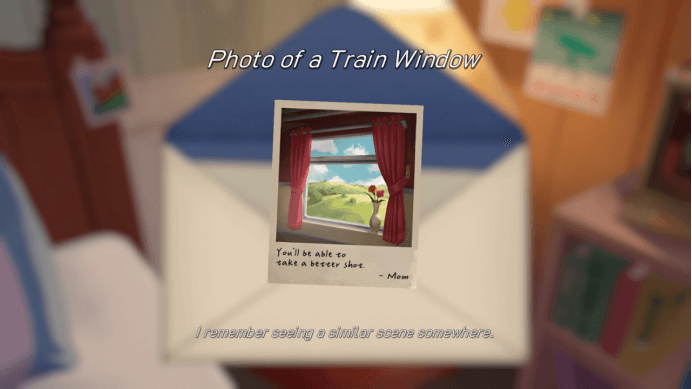
When I first raised the blacksmith’s hammer, it was more heavy than I thought. The fire cast my shadow on the hundred-year-old stone wall, and the shadow swayed clumsily, like imitating the ancient and elegant silhouettes on the wall — my father, grandfather, and all the ancestors who waved the hammer in this “Echoing Blacksmith Shop”. My name is Ryan, a young man who escaped from the family tradition, but came back because of a letter in a rusty iron box. There is only one sentence in the letter: “Strike while the iron is hot.” _While the Iron’s Hot_ gives me not the mission of inheriting the throne, but a hammer that needs to be learned to hold first, and a melting furnace that needs to be learned to listen first.
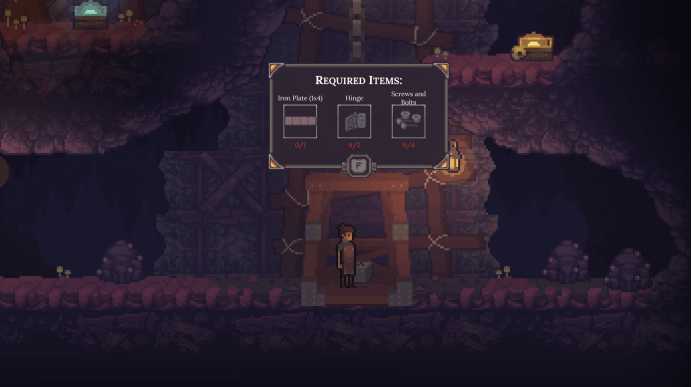
The shop is old. The tools were scattered, the orders were dusty, and the fire in the hearth was so weak that it seemed that it would swallow the last breath at any time. The initial repair was slow physical work: cleaning up the clogged air box, polishing the rusty anvils, and finding usable pliers from the scrap piles in the corner. The game turns “learning” into tactile memory — pulling the air box requires rhythm. If it is too urgent, it will turn off, and if it is too slow, the iron will not turn red; if the angle of holding the pliers is wrong, the red-burned iron will jump away like an angry fish. Failure is not a punishment, but a calm cooling of the fire, as if saying: It’s okay, let’s do it again.
Forging is a kind of dialogue. When the first piece of iron changed from a stubborn stone to a horseshoe under the beating, I understood the true core of the game. Every order is a story: the farmer needs to repair his grandfather’s plow, the knight wants to recast his broken family emblem sword, and the bard wants to make the melody of a poem into a wind chime. I need to listen to their needs first, observe the wear marks of the old things, and then choose the matching metal in the material book and control the appropriate temperature in the stove. Every successful forging is not only to complete the item, but also to complete the transmission of understanding — I not only repaired the iron tool, but also repaired the memory and trust attached to it.
But the real challenge is people. A businessman came to the town who wanted to buy the shop, and his offer could solve all financial difficulties. My apprentice, an orc girl who is always silent, looks at the fire more focused than me, but she always quietly puts the iron back into the furnace when I make a mistake. There are also those regular customers who visit occasionally. In their chat, they revealed how their father forged the same dagger that was always “not good enough” again and again in his old age. These branch tasks are not clearly marked. They are like Mars in the blacksmith’s shop, which inadvertently splashed on the body, leaving small burn marks.
With the growth of my skills, I unlocked the “inheritance blueprint” left by my father. It was a series of complex forging recipes that were almost artistic. Every time one was completed, there would be an extra tool or decoration left by him in the shop. The most touching thing is a set of carving tools, which can be used to carve fine lines on the finished items. When I first carved the family logo on the handle of the sword — an iron rose surrounded by flames — the apprentice girl stopped what she was doing, watched quietly for a long time, and then took the initiative to say for the first time: “Can you teach me how to draw this?”
There is no epic battle in the game. The final test is a seasonal celebration, and the townspeople need a batch of high-quality iron tools. Orders are pouring in, and apprentices and I must work together to manage the whole process from melting to quenching. In the busy climax, the acquisition businessman came again. This time, he silently looked at our tacit cooperation and splashing Mars for a while. Without saying anything, he left a package full of rare fuel and left. At that moment, I understood that some values could not be quoted and could only be seen in common labor.
On the night after the celebration, my apprentice and I sat in front of the extinguished stove, holding a thank-you apple from the children in the town. The shop is still old, but every tool shines with used luster in the position it should be. The apprentice suddenly said, “I want to learn to cast swords.” It’s not a request, but a declaration. I nodded and pushed my father’s note in front of her.
After quitting the game, I looked at my hands that were smooth in reality and had never held a real tool. _While the Iron’s Hot_ did not give me a grand speech about the inheritance of craftsmanship. It gave me a pair of virtual calluses and a simple understanding of “continuation”. It makes me believe that tradition is not a dogma in the shrine, but a cluster of seemingly weak fires in the hearth that can always be rekindled when the next gust of wind comes. And the real inheritance may never be to become a master, but to be the one who is willing to squat down, make a fire for the next person, and carefully clean up the air box. Because as long as someone remembers how to make iron echo, the whole shop — together with the hundred-year-old breath it carries — will live forever. In the gap between every beating and quenching, it whispers: the heat is in the moment, the hammer is in the hand, and the tradition becomes stronger than iron and warmer than fire at the moment you choose to pass on.